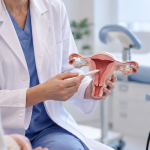

Amenorrhea: description, causes and treatment
In this article, we address questions about what amenorrhea is, its possible causes, and its recommended treatment.Common doubts about amenorrhea
What is Amenorrhea?
It consists of the temporary or permanent absence of menstruation.What causes and types of amenorrhea exist:
physiological
They do not require treatment.- before puberty: The first period or menarche usually appears between the ages of 10 and 14.
- During pregnancyA healthy, young woman with regular menstruation who experiences amenorrhea and has sexual relations without contraception should consider pregnancy.
- Lactation: Although irregular, amenorrhea occurs due to the inhibition of hormones that stimulate ovulation.
- Menopause: It usually appears between the ages of 45-55 due to the cessation of ovarian function.
Primary
Absence of menstruation at age 16 in the presence of secondary sexual characteristics, or at age 14 without the development of secondary sexual characteristics. It has an incidence of 0.1%, and 60% is due to genetic causes. The remaining 40% is due to endocrine disorders.Uterine causes:
- Rokytansky syndrome (partial or total absence of uterus and vagina),
- imperforate hymen
- and Morris Syndrome (woman with XY male karyotype).
Ovarian causes:
- Polycystic Ovary Syndrome (a disorder that affects up to 26% of the population. It causes ovarian dysfunction that can lead to primary and secondary amenorrhea, as well as acne and excess hair growth (hirsutism).
- and premature ovarian failure (Turner syndrome and gonadal dysgenesis, in both cases women fail to develop functioning ovaries).
Hypothalamic-pituitary causes:
- Hypogonadotropic hypogonadism (absence, due to multiple origins, of secretion in the hypothalamus-pituitary gland of gonadotropic hormones: GnRH, FSH or LH),
- Olfactory dystrophy or Kallman syndrome (absence of GnRH secretion in the hypothalamus due to genetic causes),
- physical exercise,
- weight gain or loss
- and psychogenic causes.
high schools
Lack of menstruation in a woman who has already had it previously and after an absence of more than 6 months.Uterine causes:
- Asherman's syndrome (uterine synechiae),
- Cervical stenosis,
- Genital tuberculosis
- and Endometritis (infection of the endometrium).
Ovarian causes:
- Polycystic Ovary Syndrome,
- Premature ovarian failure (depletion of ovarian reserve before the age of 40, which can be due to genetic, autoimmune, infectious, radiotherapy, or chemotherapy causes).
Hypothalamic causes:
- Weightloss,
- exercise,
- stress,
- anorexia nervosa
- or idiopathic (unknown) cause.
Pituitary causes:
- Hyperprolactinemia (elevation of the hormone Prolactin outside of breastfeeding),
- Hypopituitarism (absence of production of all or some pituitary hormones),
- Sheehan's syndrome (pituitary gland infarction following postpartum hemorrhage),
- Craniopharyngiomas,
- Holocranial radiotherapy,
- head injuries,
- sarcoidosis
- and Tuberculosis.
Systemic causes:
- Diabetes Mellitus,
- Lupus,
- Endocrine disorders (such as Cushing's Syndrome or thyroid disease, both hyper and hypothyroidism).
Drugs and medicines:
- Cocaine,
- opiates,
- psychotropic drugs (stimulants such as amphetamines, also tranquilizers and antidepressants),
- progesterone
- and GnRH Analogs.
Treatment indicated for amenorrhea
There are many causes of amenorrhea, both primary and secondary. And there are many treatments that will depend on the origin of the dysfunction. In some cases, treatment is simple, while in others, treatment is completely untreatable. Hence the importance of consulting a specialist for an accurate diagnosis when this condition occurs.If you found this article interesting and would like to be seen by a professional expert in Gynecology and Obstetrics, the Women's Unit at Ruber International Hospital has a specialized unit in this area. You can request more information by calling 917303673. make an appointment for an in-person consultation Or make an appointment for an online consultation if you prefer remote consultations—always with the best specialists. Leave a comment