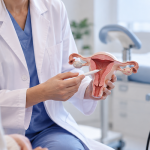

Pelvic organ prolapse
El pelvic floor It is the area located in the lower part of the pelvis. Its function is to support the lower abdomen, preventing the pelvic organs from moving outwards. In this way, when the pelvic floor is damaged, can lead to complications such as pelvic organ prolapseThus, the Dr. Isabel Rodríguez-Piñero Cebrián, a specialist from the Women's Unit at the Ruber International Hospital, has explained to us through her Instagram account Some of the keys to learning more about prolapses and, thus, being able to prevent or detect them.
If you found this article interesting and would like to be seen by a professional expert in Gynecology and Obstetrics, the Women's Unit at Ruber International Hospital has a specialized unit in this area. You can request more information by calling the following numbers: 91 387 51 72/73/74 or make an appointment for an in-person consultation, always with the best specialists. [/ Vc_column_text] [/ vc_column] [/ vc_row]
Leave a comment What are pelvic organ prolapses?
Prolapses occur when a herniation of the pelvic organs (uterus, bladder, rectum and sometimes even the intestine) through the vaginal wallThis is due, as we said, to damage to the pelvic floor. Thus, among the risk factor's These include pregnancies, obesity problems, menopause, and even certain diseases that increase intra-abdominal pressure, such as lung diseases such as COPD or chronic constipation.What is the prevalence of prolapses?
In reality, pelvic organ prolapses have a unknown prevalence, since many women, either out of modesty or ignorance, do not seek help for certain symptoms or discomfort. Furthermore, studies use different terminology when referring to prolapses. Therefore, it is difficult to determine the true prevalence.What are the most common symptoms of prolapse?
In general, one of the most common symptoms that can alert to the existence of pelvic organ prolapse is sensation of having a lump in the vaginaTherefore, it's important to see a specialist for an examination to determine the cause. However, there are other symptoms that may be associated with prolapses:- Urinary incontinence
- Nocturia, that is, the need to get up several times during the night to urinate.
- Loss of urine during sexual intercourse.
- Discomfort in sexual intercourse.
- Rectal incontinence.
- Other disorders of the rectum.
The importance of taking care of the pelvic floor
For this reason, in the Women's Unit of the Ruber International Hospital we always remember the importance of taking care of the pelvic floorespecially in situations that may further compromise this part of the body, such as pregnancy and postpartumAt UDM we have a physiotherapist Pilar Cortés Llanos, specializing in pelvic floor care. Our specialist will perform a series of diagnostic tests on the patient to provide an assessment and, with this, be able to proceed with appropriate treatment. In addition, during pregnancy he or she will be able to advise on exercises and techniques to avoid later problems such as pelvic organ prolapse, abdominal diastasisetc. Regarding the possible treatmentDepending on the severity of the prolapse, performing a series of exercises to strengthen the pelvic floor may be sufficient. However, in more severe cases, surgery is necessary.Related articles
- Kegel exercises for pelvic floor recovery
- Pelvic floor dysfunctions
- Chronic pelvic pain: causes and treatment
If you found this article interesting and would like to be seen by a professional expert in Gynecology and Obstetrics, the Women's Unit at Ruber International Hospital has a specialized unit in this area. You can request more information by calling the following numbers: 91 387 51 72/73/74 or make an appointment for an in-person consultation, always with the best specialists. [/ Vc_column_text] [/ vc_column] [/ vc_row]