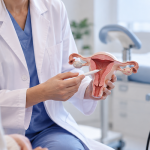

Symptoms and treatment of uterine fibroids
The Uterine fibroids are benign tumors that appear in the uterus. Thus, according to data from the Dr. Julio Álvarez BernardiAccording to the Head of the Gynecological Oncology Department at the Women's Unit, up to 70% of women will develop fibroids at some point in their lives, although the prevalence is influenced by factors such as age and race. Thus, while some fibroids are very small, others are large enough to deform the uterus. Similarly, some uterine fibroids have very few symptoms and are detected incidentally during routine checkups, while others can cause bothersome symptoms. The difference between them generally lies in the size and location in the uterine cavity.
If you found this article interesting and would like to be seen by a professional expert in clinical psychology, the Women's Unit at Ruber International Hospital has a specialized unit in this area. You can request more information by calling the following numbers: 91 387 51 72/73/74 or make an appointment for an in-person consultation, always with the best specialists. [/ Vc_column_text] [/ vc_column] [/ vc_row]
Leave a comment 
Main symptoms of uterine fibroids
- Abnormal menstrual bleeding: menorrhagia (menstruation with very heavy and long-lasting bleeding), metrorrhagia (when bleeding occurs between menstrual periods) or when the period is very prolonged.
- Pelvic pain, back and leg pain, discomfort during sexual intercourse, pressure in the pelvic area…
- Pressure on the urinary and digestive systems, which can lead to problems such as increased urinary frequency, difficulty urinating, constipation, and more.
- Anemia, derived from increased menstrual bleeding.
- Reproductive problems, as uterine fibroids can cause infertility, miscarriages, pregnancy risks, premature births, and more.
How is it diagnosed
As we mentioned, there are several indicators that can trigger suspicion of a uterine fibroid. One of them is abnormal uterine bleeding, or when, during an examination, palpation detects that the uterus has increased in sizeTherefore, we will proceed to carry out a both vaginal and abdominal ultrasoundto confirm the presence of uterine fibroids and, in turn, their location, size, and vascularization. In addition, if necessary, a magnetic resonance to make a more precise diagnosis, especially in large or highly vascularized fibroids. There is also the option of performing a hysteroscopy Through the vagina, for cases of submucosal fibroids, which are those that grow into the uterus. Finally, the definitive diagnosis will be obtained through a biopsy and pathological study in cases where treatment is required for surgery.
Types of treatments for uterine fibroids
Uterine fibroids can be treated in different ways, although we could distinguish two main types of treatments: medical treatments and surgical treatments.Medical treatments
When uterine fibroids are small in size and do not cause serious symptoms, medical treatments can be used to prevent symptoms and even reduce the size. Thus, among the options are:- Antihormonal medications, whose function is to block the action of gonadotropin-releasing hormone, which promotes growth, are also used before surgery to reduce size, as Dr. Álvarez Bernardi explains.
- Non-hormonal symptomatic treatments. These reduce symptoms but do not change their severity. These include iron-based treatments, anti-inflammatory drugs, and more.
- Symptomatic hormonal treatments. The use of contraceptives (the pill, IUD, etc.) and progestins can help control bleeding.
surgical treatments
When uterine fibroids cause severe symptoms In the patient, medical treatments are not effective or, even after an ultrasound there is a suspicion of signs of malignancy, it is necessary remove them and analyze them in the laboratoryIn this case, we will encounter situations where only the removal of the fibroid or fibroids in question is necessary, while in others a hysterectomy will be required to remove the uterus. Thus, we currently have a much safer surgical procedure for the patient with a faster recovery, which is the Minimally Invasive Surgery, Which Dr. Julio Álvarez Bernardi is a specialistThis technique allows for the removal of fibroids through small incisions or even through natural orifices in the body. Thus, MIS techniques for the treatment of uterine fibroids include:- Laparoscopy: fibroids are removed through small incisions in the abdomen, less than 1 cm in size.
- Hysteroscopy: This involves removing fibroids located inside the uterus without making incisions, using an endoscope through the vagina and cervical canal.
- v-NOTES Surgery: a highly innovative technique that allows the use of natural orifices in the body, such as the vagina, to perform surgeries such as myomectomy or hysterectomy. This technique significantly reduces postoperative pain and the risk of infection, and accelerates the recovery process.
Other treatments
In addition to medical and surgical treatments, there are other alternatives for the treatment of uterine fibroids such as Uterine Artery Embolization, which involves blocking blood flow to them to reduce their size; or radiofrequency ablation and magnetic resonance-guided focused ultrasoundThese treatments precisely remove fibroids. However, as the doctor explains, they have limitations, since there is no definitive diagnosis by biopsy, and absolute safety for the patient has not been demonstrated. For this reason, the type of treatment for uterine fibroids will be chosen in a personalized and individualized manner, taking into account the type of fibroid, the symptoms, and the patient's desire to become a mother. In any case, the most important thing is the carrying out periodic reviews to detect them early. You can find more information about uterine fibroids, their symptoms, and treatments at this article published on the website of the Ruber International Hospital.Related articles
- Minimally invasive surgery in gynecology
- Diagnostic or outpatient hysteroscopy
- Dyspareunia or pain during sexual intercourse: causes and recommendations
If you found this article interesting and would like to be seen by a professional expert in clinical psychology, the Women's Unit at Ruber International Hospital has a specialized unit in this area. You can request more information by calling the following numbers: 91 387 51 72/73/74 or make an appointment for an in-person consultation, always with the best specialists. [/ Vc_column_text] [/ vc_column] [/ vc_row]