
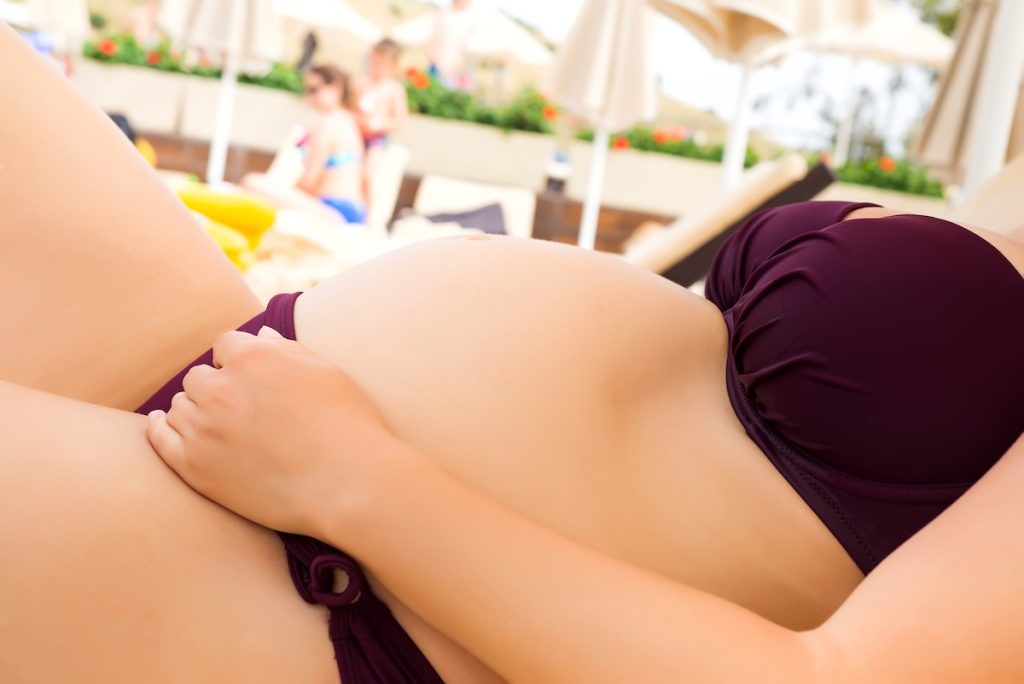
Sunbathing during pregnancy: recommendations for enjoying summer safely
Summer invites us to spend more time outdoors, enjoy the beach or the pool, and make the most of the sunny days. However, during pregnancy, it's important to take some precautions to protect both the mother's and the baby's health.
Dr. Carlos de Granda, a specialist in Gynecology and Obstetrics at the Women's Unit of the Ruber International Hospital, explains the main recommendations for sunbathing safely during pregnancy.
Is it safe to sunbathe during pregnancy?
Yes, provided it is done in moderation and following a series of protective measures.
Sun exposure promotes the synthesis of vitamin D, essential for the mother's bone health and the baby's proper development. However, excessive heat and ultraviolet radiation can increase certain risks during pregnancy.
Therefore, the key is to enjoy the sun responsibly.
Hydration, a priority
During pregnancy, fluid requirements increase and high temperatures promote water loss through sweat.
Dehydration can cause symptoms such as dizziness, tiredness, headache or low blood pressure and, in more serious cases, can trigger uterine contractions.
That's why it's recommended:
- Drink water frequently, even if you are not thirsty.
- Always carry a bottle of water when outdoors.
- Eat fruits rich in water, such as watermelon, melon or peach.
- Avoid staying in the sun for long periods if it is very hot.
Why do spots appear on the skin during pregnancy?
The hormonal changes that occur during pregnancy make the skin much more sensitive to solar radiation.
As a result, a condition known as chloasma or melasma , popularly called "pregnancy spots," may appear. These are dark spots that usually appear on the forehead, cheeks, upper lip, or nose.
Although they improve in many women after childbirth, in some cases they can persist, so prevention is essential.
Tips for sunbathing safely
If you are pregnant, these recommendations can help you enjoy the summer while minimizing risks:
- Avoid the middle of the day (approximately between 12:00 and 17:00), when solar radiation is most intense.
- Limit prolonged sun exposure. It is recommended not to stay in direct sunlight for more than 20-30 minutes at a time.
- Alternate periods of sun with moments of shade.
- Use physical protection, such as wide-brimmed hats, caps, sunglasses, and lightweight clothing that covers the skin where possible.
- Apply a broad-spectrum sunscreen with a high protection factor (SPF 50+), reapplying it every two hours or after swimming.
- Stay well hydrated before, during and after sun exposure.
Listen to your body
Pregnancy changes how your body regulates its temperature. If you experience dizziness, weakness, overheating, or discomfort while in the sun, find a cool place, stay hydrated, and rest.
Every pregnancy is different and some women may be more sensitive to high temperatures than others.
Enjoy the summer in peace and quiet
Sunbathing during pregnancy is not contraindicated, provided it is done with common sense and by adopting appropriate protective measures.
Proper hydration, avoiding peak sun hours, and protecting your skin with a high-protection sunscreen are simple habits that help you enjoy summer safely.
At the Women's Unit of the Ruber International Hospital, Dr. Carlos de Granda and his team accompany expectant mothers throughout all stages of pregnancy, answering their questions and offering personalized recommendations for a healthy pregnancy.