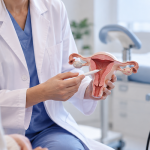

Artificial insemination with partner's semen (AI): fulfilling the dream of parenthood
- the one made with partner's semen (IAC)
- or with donor semen (IAD).
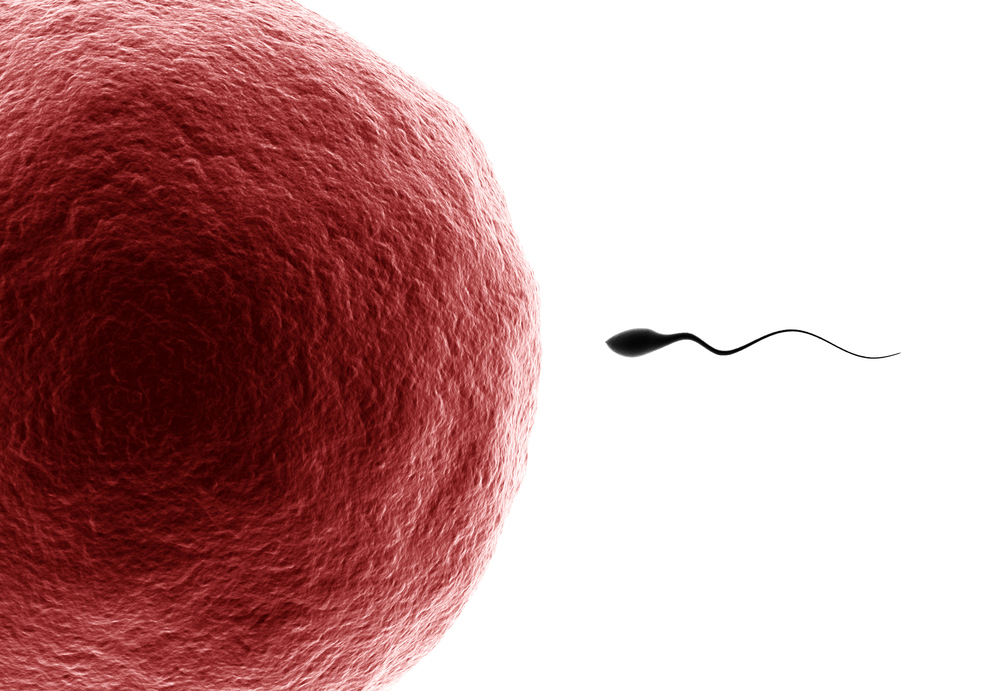
Artificial insemination with partner's semen (AI)
When is Artificial Insemination with Partner's Semen Indicated?
- When a mild alteration in the semen is detected in a man.
- When a woman has ovulation defects or suffers from mild endometriosis.
- In cases of sterility of unknown origin.
Requirements
- Women must be able to ovulate spontaneously or with treatment and have at least one patent (unobstructed) tube. A hysterosalpingogram is performed to check tubal patency.
- Men require a minimum concentration of recovered motile spermatozoa - greater than 3 million.

Procedure: ovarian stimulation
1st. A is made gentle stimulation of ovulation through intramuscular hormone injections for 10-12 days. The goal is to produce a maximum of two follicles, thereby increasing the chances of pregnancy. Naturally, women usually produce only one follicle per menstrual cycle. 2. During this period, between 3 and 4 ultrasounds to monitor the progress of the treatment. The growth and development of the follicles will also be checked through the blood estradiol level3. After the ultrasound scan, which will determine when the dominant follicle reaches a size of between 17 and 20 mm, the woman will be administered, via subcutaneous injection, the human chorionic gonadotropin hormone (hCG)This hormone will be responsible for completing the maturation of the follicle and inducing ovulation. 4. After a few 35-37 horas Since the hCG injection, the follicle must have reached the appropriate size. Vaginal ultrasounds will be used to confirm this, after which artificial insemination will be scheduled5. The semen sample will be taken to the reproductive laboratory approximately two hours before the AI. There, the biologists will analyze it. will train the sample, preparing the motile sperm in a 0,2 ml container. They will then be introduced into the woman's uterus in a simple intervention that does not require sedation and is performed in the office itselfWith the help of a vaginal speculum, the specialist inserts the cannula containing the sperm sample through the cervix and into the uterus. The discomfort the woman will experience will be no greater than that caused by a routine Pap smear. 6. After resting for a few minutes in the examination room, the patient will be scheduled for the procedure. pregnancy test around 15 days later. In addition, the need to prescribe medication will be considered –progesterone To promote implantation. During this time, you should lead a normal life, avoiding high-intensity physical activity. More information about ovarian stimulation. here.
Probabilities of success of Artificial Insemination with Partner's Semen
The success rate of artificial insemination with the partner's semen varies between 10 and 15% per cycle, and 2 to 4 cycles are performed.
Related content
- Let us help you start a family
- What factors are related to fertility
- "I'm not getting pregnant": basic infertility assessment
- Controversy over uterus transplantation as a technique in reproductive treatments
More information from Dr. Suárez of UDM:
If you found this article interesting and would like to be seen by a professional expert in Artificial Insemination, the Women's Unit at Ruber International Hospital has a specialized unit in this area. You can request more information by calling the following numbers: 91 387 51 72/73/74 or make an appointment for an in-person consultation, always with the best specialists.