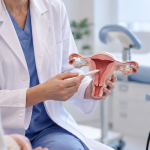

Cervical cancer prevention
El cervical cancer es the second most common in women in developed countries, after breast cancer.Cervical cancer and HPV
It is caused by alterations in the cells of the cervix, usually caused by the human papilloma virus (HPV)More than 100 types of this virus are known, although 70% of cases are caused by types 16 and 18. (Data from the Global Burden of Human Papillomavirus and Related Diseases. Vaccine 2012). HPV is, at the moment, the only known type of cancer that is caused by a virus. It is not hereditary And not all women who are carriers will develop the disease, as the virus can be present in an inactive state. However, even if they don't develop the disease, they will still have a chance of developing cervical cancer. The most common types and the most frequent tumors are:- el squamous cell carcinoma, which develops in the lining of the cervix;
- and the adenocarcinoma, which is found in the glands that produce cervical fluid.
Symptoms, diagnosis and treatment
It is a disease that It usually does not present symptomsIt only appears in very advanced stages, which is why prevention and regular Pap smears are so important. It is necessary See a doctor if you bleed after intercourse, between periods, or if you notice swelling in the area. At present, Thanks to cytology, it can be easily discovered If a woman has the virus. Furthermore, this simple test can also detect changes and alterations in cervical cells before they become cancerous. Therefore, Mortality from this type of cancer has decreased significantly. If the cancer cells are found in the outermost part of the cervix, surgical conization can be performedThis procedure involves removing only this area. This could later affect a woman who wishes to become a mother, as she will have a higher risk of miscarriage, since the cervix may remain more open. This issue can be resolved with a simple procedure to close it with stitches, called a cerclage. If the cancer has progressed and is already considered a invasive carcinoma the entire uterus and regional lymph nodes must be removed, which is known as Wertheim-Meigs operation.Cervical cancer prevention
The realization of gynecological check-ups with cytology is the best way to prevent injury, even in women who have undergone a hysterectomy (total or partial removal of the uterus) to observe for possible changes in the vulva and vagina. Since it is a sexually transmitted virus, testing is recommended. use of condoms in all types of sexual practices, since transmission of the virus can cause cancer of the rectum, pharynx, or penis. It is estimated that around 6,800 new cases of anal cancer occur annually in Europe. Of these, 75-80% are attributed to HPV types 16 and 18, responsible for the majority of cases in Europe, according to "Global burden of cancers attributable to infections in 2008: a review of synthetic analyses." Dr. Vidal recommends the vaccination as a prevention method, as it helps combat the types of HPV responsible for most cases in Europe.La Gynecological Cancer Prevention Unit The Women's Unit at Ruber International Hospital is led by Dr. Alfonso Duque Frischkorn.
HPV vaccines
In our country, The HPV vaccine is included in the vaccination schedule and funded by the National Health System for girls between 11 and 14 years old. The vaccination age varies depending on the Autonomous Community, always within this range. The recommendation is vaccinate against HPV as soon as possible For maximum protection, it is best to take medication before the start of sexual activity to avoid having been exposed to the virus. The WHO recognizes the high efficacy and safety of vaccination against HPV. In Spain, two vaccines are marketed to prevent HPV:- Gardasil , since 2007, marketed by the Sanofi Pasteur laboratory (MSD).
- Cervarix, in Spain, since 2008, by Glaxo-SmithKline (GSK).
Gradasil
Gradasil is the only tetravalent vaccine against the Human Papillomavirus (HPV)Gardasil is indicated for the prevention of precancerous genital lesions (cervical, vulvar, and vaginal), cervical cancer, and genital warts caused by HPV types 6, 11, 16, and 18. Approved by the European Medicines Agency (EMA) in 2006, 29 million doses have been distributed across the continent, although it was only in 2007 that it became available in Spain. Gardasil is administered according to a regimen of 2 or 3 doses depending on the age of vaccination. In individuals over 14 years of age, it is given in three doses to ensure efficacy and long-term protection, although the EMA has recently authorized administration in two doses for children and adolescents between 9 and 13 years of age, inclusive. This medicine is indicated only for prophylactic use, since it has not been shown to have a therapeutic effect. To date, no studies have been conducted in Spain to evaluate the change in HPV incidence after the introduction of the vaccine in the country, as 15 to 20 years are needed to measure its effectiveness. However, the impact of these programs can be assessed in shorter timeframes by observing the reduction in genital warts and precancerous lesions. In this regard, according to data from a recent study published in Australia after the implementation of a prevention program using this vaccine, In less than four years the incidence of genital warts has decreased dramatically, having practically disappeared among the generations to which the vaccine was administered (women under 21 years of age).Cervarix
Cervarix It is also indicated for the prevention of premalignant lesions of the cervix and cervical cancer, incidentally related to HPV types 16 and 18. It offers an innovative AS04 adjuvant system, which confers high potency and duration of immunization. Like Gardasil, it is administered in three doses. From the Women's Unit we recommend that all women carry out a annual gynecological check-up, and/or that in any case they go to their gynecologist if they observe any type of anomaly.Article written by Dr. Vidal, Director of the Women's Unit at Ruber International Hospital.
If you found this article interesting and would like to be seen by a professional expert in Gynecology and Obstetrics, the Women's Unit at Ruber International Hospital has a specialized unit in this area. You can request more information by calling the following numbers: 91 387 51 72/73/74 or make an appointment for an in-person consultation, always with the best specialists. Leave a comment